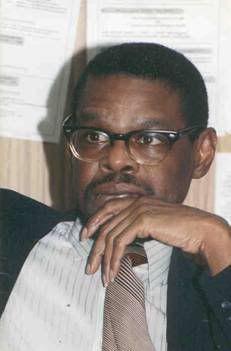
Are you looking for a job???
State Representative Marc Veasey Job Fair
“Save the Date”
Wednesday, September 10, 2008
10:00 a.m. to 2:00 p.m.
Resource Connection Conference Center
2300 Circle Drive
Fort Worth, Texas 76112
Business attire encouraged and please be sure to bring a current RESUME!!
This is a free event to the public of all ages.
Marc Veasey, State Representative
James E. Guinn/Tech Fort Worth
1120 South Freeway, Suite 121
Fort Worth, Texas 76104
Phone: (817) 339-1430
Fax: (817) 339-9352
Marc.Veasey@house.state.tx.us
Monday, August 18, 2008

Tuesday, August 5, 2008
In the Face of Kim Brimer: Courage abandons Republican Incumbent
The coward is not a gentleman, says Eddie Griffin, Fort Worth. So says other constituents:
Republican state Sen. Kim Brimer is so reluctant to face Democratic challenger Wendy Davis that he would rather file non-meritorious lawsuits than have the voters decide who is more qualified to serve as their state senator. State District Judge Tom Lowe upheld Davis’ position on every important disputed point. Brimer is apparently fearful of running on his Senate record and wants to avoid an exchange of ideas with the formidable Davis. This is understandable, given his poor record and her excellent qualifications. — Juana Byrd, Arlington
Brimer’s playing a political game, all right. It’s a new version of hide-and-seek where Brimer hides behind judges. (See J.R. Labbe column, "Blatant political game playing in Senate race?," July 27) Is that the focus of Brimer’s "high-profile" campaign? What about rising utility rates? Rising gas rates? Rising insurance rates? Air quality? Transportation, light rail, rush-hour gridlock? Unemployment and underemployment? High-profile campaigning is where you defend your voting record and lay out your positions on key issues. Possibly Brimer is hoping none of that comes about by playing musical judges.
The constituents of Senate District 10 should be able to choose their representation on the basis of the candidates’ position on issues important to them, not on political gamesmanship. Brimer’s silly games deny them that information and insult their intelligence. — Fred Harper, Fort Worth
Unlike J.R. Labbe, I think the 236th District Court gave a very definitive answer to the legal question of Davis’ eligibility to run for State Senate, and one that is highly unlikely to be overturned on appeal. However, even if there were unanswered legal questions, as Labbe suggests, Brimer has shown quite clearly that he doesn’t care about those questions. He didn’t even bother to show up to the courtroom for his own hearing.
My mother always told me that actions speak louder than words, and Brimer’s actions make him look like he is afraid to let the voters have their say in who represents them. I can only guess that’s because he knows that Davis is the stronger of the two candidates. — Jim Klimchock, Arlington
I have always voted Republican. But I’m voting for Wendy Davis. Sen. Kim Brimer has turned into "one of them." One of the "good guys" who have turned their backs on their constituents and are now part of the Big Business Machine running things in Austin.
Case in point: Brimer was in a key position as a state senator, along with Chris Harris, to put some limits on just how badly the deregulated electricity market was going to be able to put the screws to us. They helped squelch every law out of the Regulated Industries Committee that would have somewhat protected consumers. Don’t believe me? Check it out. Their excuse? They didn’t want to regulate "free enterprise." What a joke! — John T. Johnson III, Arlington
Republican state Sen. Kim Brimer is so reluctant to face Democratic challenger Wendy Davis that he would rather file non-meritorious lawsuits than have the voters decide who is more qualified to serve as their state senator. State District Judge Tom Lowe upheld Davis’ position on every important disputed point. Brimer is apparently fearful of running on his Senate record and wants to avoid an exchange of ideas with the formidable Davis. This is understandable, given his poor record and her excellent qualifications. — Juana Byrd, Arlington
Brimer’s playing a political game, all right. It’s a new version of hide-and-seek where Brimer hides behind judges. (See J.R. Labbe column, "Blatant political game playing in Senate race?," July 27) Is that the focus of Brimer’s "high-profile" campaign? What about rising utility rates? Rising gas rates? Rising insurance rates? Air quality? Transportation, light rail, rush-hour gridlock? Unemployment and underemployment? High-profile campaigning is where you defend your voting record and lay out your positions on key issues. Possibly Brimer is hoping none of that comes about by playing musical judges.
The constituents of Senate District 10 should be able to choose their representation on the basis of the candidates’ position on issues important to them, not on political gamesmanship. Brimer’s silly games deny them that information and insult their intelligence. — Fred Harper, Fort Worth
Unlike J.R. Labbe, I think the 236th District Court gave a very definitive answer to the legal question of Davis’ eligibility to run for State Senate, and one that is highly unlikely to be overturned on appeal. However, even if there were unanswered legal questions, as Labbe suggests, Brimer has shown quite clearly that he doesn’t care about those questions. He didn’t even bother to show up to the courtroom for his own hearing.
My mother always told me that actions speak louder than words, and Brimer’s actions make him look like he is afraid to let the voters have their say in who represents them. I can only guess that’s because he knows that Davis is the stronger of the two candidates. — Jim Klimchock, Arlington
I have always voted Republican. But I’m voting for Wendy Davis. Sen. Kim Brimer has turned into "one of them." One of the "good guys" who have turned their backs on their constituents and are now part of the Big Business Machine running things in Austin.
Case in point: Brimer was in a key position as a state senator, along with Chris Harris, to put some limits on just how badly the deregulated electricity market was going to be able to put the screws to us. They helped squelch every law out of the Regulated Industries Committee that would have somewhat protected consumers. Don’t believe me? Check it out. Their excuse? They didn’t want to regulate "free enterprise." What a joke! — John T. Johnson III, Arlington
Thursday, March 13, 2008
Free Online Training on Economic Stimulus Payments
IMPORTANT INFORMATION
ALERT TO: Low-Income Retirees, Disabled Veterans and Low-Wage Earners
Starting in May, more than 130 million households will receive an economic stimulus payment from the Internal Revenue Service. Most people don't need to do anything special to get a payment; they can just file their taxes as usual and the IRS will do the rest.
But millions of people who are usually exempt from filing tax returns -- including low-income retirees, disabled veterans and low-wage earners -- must file a return in order to receive their payment.
You can help by serving as a resource for the individuals and families in your community.
The National Women's Law Center is hosting a free webinar to give service providers and advocates the information they need on the economic stimulus payments, including:
* Who's eligible for the payments
* How much the payments can be worth
* What individuals and families need to do to apply for the payments
* When individuals and families will receive the payments
* Tools that can help organizations educate the public
Register today for this webinar (free but registration required):
"Economic Stimulus Payments: What Families Need to Know"
Thursday, March 20, 2008 - 3:00 p.m. Eastern (Note: 2 pm CST)
To register, go to: http://action.nwlc.org/stimuluswebinar
These webinars are part of the National Women's Law Center's Citi Education Series on Family Economic Security: www.nwlc.org/educationseries
ALERT TO: Low-Income Retirees, Disabled Veterans and Low-Wage Earners
Starting in May, more than 130 million households will receive an economic stimulus payment from the Internal Revenue Service. Most people don't need to do anything special to get a payment; they can just file their taxes as usual and the IRS will do the rest.
But millions of people who are usually exempt from filing tax returns -- including low-income retirees, disabled veterans and low-wage earners -- must file a return in order to receive their payment.
You can help by serving as a resource for the individuals and families in your community.
The National Women's Law Center is hosting a free webinar to give service providers and advocates the information they need on the economic stimulus payments, including:
* Who's eligible for the payments
* How much the payments can be worth
* What individuals and families need to do to apply for the payments
* When individuals and families will receive the payments
* Tools that can help organizations educate the public
Register today for this webinar (free but registration required):
"Economic Stimulus Payments: What Families Need to Know"
Thursday, March 20, 2008 - 3:00 p.m. Eastern (Note: 2 pm CST)
To register, go to: http://action.nwlc.org/stimuluswebinar
These webinars are part of the National Women's Law Center's Citi Education Series on Family Economic Security: www.nwlc.org/educationseries
Thursday, January 31, 2008
The Cause of the Poor: Ever before Me
Mosley Knocked Out of Commissioner Court Race via Self-Defeat
Commentary by Eddie Griffin
Thursday, January 31, 2008
I am not ashamed to say that I represent “the poorest of the poor”. Any local public official knows that I will engage in protests and demonstrations on behalf of the poor. If necessary, I use grassroots organizing to put people in front of the faces of our elected officeholders. I don’t think kindly of criticism, because you criticize, not me, but the poor in destitute.
There is no greater defender of the cause of the poor than incumbent Roy C. Brooks, Tarrant County Commissioner, Precinct 1. Challenging his seat is an unknown Cory L. Mosley.
What do we know about the challenger?
I know nothing of Ms. Mosley except that, by entering the race for Commissioners Court, she impedes the cause of the poor. A leader must be proven in the field, and Lord knows I have beaten Roy Brooks over the head with the plight of the poor, and he heard our cry through this incumbent’s voice.
I have never seen this woman, Cora Mosley, in my life, and Roy Brook should be tired of looking at me every day, and hearing me cry in his ear, everywhere he goes. I guess you can call me a stalker. But that’s my job, stalking officeholders and office seekers.
Brooks, the lone Democrat on the Commissioners Court, is always challenged to raise the issues of the poor, such as addressing the high infant mortality in the African-American community, poverty and homelessness- not to say the less, also for ex-offenders like me, to become re-socialized and integrated back into the community through the Commissioner’s Reentry Initiative.
A Whiff of Mosley
I caught a brief glance of Ms. Mosley and a whiff of her as she made a swift exit- even before she took the podium at the TCU Democratic Rally on Saturday. At the rally were all the powerhouse Democrats, supporters, and volunteers. There was energy in the room, from all races and economic and class background- the broadest base of the local Democratic power base- and Ms. Mosley exited the rally, “with a more important function”, i.e. her “political club” meeting.
Here was the largest political club of allegiance, and Ms. Mosley cut out before I could light into her. On the other hand, when Roy Brooks mounted the podium, FIRED UP & READY TO GO, he inspired the room, a proven leader among the Democratic Party, second generation of the famous Brooks family civil rights legacy, son of the eminent late Dr. Marion Brooks, Ms. Mosley “Knocked Out of Commissioner Court via Self-Defeat”. She bowed out of a room, full of greatest, to get together with petty little friends in a lust for office. On the Commissioners court, she would be lion’s food.
Commentary by Eddie Griffin
Thursday, January 31, 2008
I am not ashamed to say that I represent “the poorest of the poor”. Any local public official knows that I will engage in protests and demonstrations on behalf of the poor. If necessary, I use grassroots organizing to put people in front of the faces of our elected officeholders. I don’t think kindly of criticism, because you criticize, not me, but the poor in destitute.
There is no greater defender of the cause of the poor than incumbent Roy C. Brooks, Tarrant County Commissioner, Precinct 1. Challenging his seat is an unknown Cory L. Mosley.
What do we know about the challenger?
I know nothing of Ms. Mosley except that, by entering the race for Commissioners Court, she impedes the cause of the poor. A leader must be proven in the field, and Lord knows I have beaten Roy Brooks over the head with the plight of the poor, and he heard our cry through this incumbent’s voice.
I have never seen this woman, Cora Mosley, in my life, and Roy Brook should be tired of looking at me every day, and hearing me cry in his ear, everywhere he goes. I guess you can call me a stalker. But that’s my job, stalking officeholders and office seekers.
Brooks, the lone Democrat on the Commissioners Court, is always challenged to raise the issues of the poor, such as addressing the high infant mortality in the African-American community, poverty and homelessness- not to say the less, also for ex-offenders like me, to become re-socialized and integrated back into the community through the Commissioner’s Reentry Initiative.
A Whiff of Mosley
I caught a brief glance of Ms. Mosley and a whiff of her as she made a swift exit- even before she took the podium at the TCU Democratic Rally on Saturday. At the rally were all the powerhouse Democrats, supporters, and volunteers. There was energy in the room, from all races and economic and class background- the broadest base of the local Democratic power base- and Ms. Mosley exited the rally, “with a more important function”, i.e. her “political club” meeting.
Here was the largest political club of allegiance, and Ms. Mosley cut out before I could light into her. On the other hand, when Roy Brooks mounted the podium, FIRED UP & READY TO GO, he inspired the room, a proven leader among the Democratic Party, second generation of the famous Brooks family civil rights legacy, son of the eminent late Dr. Marion Brooks, Ms. Mosley “Knocked Out of Commissioner Court via Self-Defeat”. She bowed out of a room, full of greatest, to get together with petty little friends in a lust for office. On the Commissioners court, she would be lion’s food.
Wednesday, December 19, 2007
Homelessness and the Housing Dilemma
It is the contradiction of our times: To have so much empty and available housing stock and a growing homeless population. Today was one of those days where Housing was the main topic on my agenda.
First, I am locked into a debate about the housing crisis in New Orleans. The government is proposing to demolish substandard project housing units, while people are sleeping under bridges. There is an active protest against it.
Second, I attended a strategy session on transitional housing program for ex-offenders.
We, in Tarrant County, Texas, are solution-oriented. We are a very large and active community, working on various committees, sub-committees, and projects. For the past two-and-a-half years, we have been laying the groundwork for reentry of previously incarcerated persons (PIPs). A large percentage of those will have transitional housing needs.
Today, I was a proud part of the formation of the Residential Reentry Association, a support network of transitional housing for PIPs. We are changing the name from “Group Homes” to “Transitional Housing”.
I believe this concept works if we measure the basic unit in terms of “bed space”, rather than housing units. This would better facilitate cost accounting and resource management. Case management of clients can be streamlined through an in-and-out logging system, registering hours of service, and which types of services.
We have successfully identified the types of services PIPs need. Therefore, the Tarrant County Reentry Council is subdivided in 10 workgroups. The newly formed Residential Reentry Association will be part of the Housing solution, and work to expand capacity in terms of bed-space and sponsorship.
We recognized that sometimes PIPs will fall into the ranks of the homeless, but usually after some time at failing to reintegrate into society (The almost-made-it bunch). For the sake of the Reentry Housing strategy, this is a different demographic. The City of Fort Worth has appointed a homeless czar assigned the Herculean task of picking the homeless off the ground.
There has been a recent wave of evictions- from apartments and homesteads. The shakeout has created more homelessness. We are finding substance abusers and alcoholics falling into the ranks of the homeless. And, we see a rise in petty crimes and drug arrests.
More and more, as I drive around the neighborhood I see people belongings sitting on the curb. Some evictees are desperate enough to break back in, and squat under the cover of darkness, or until evicted again. Later, these abandoned houses become homeless haunts and drug houses. Eventually, these units fall victim to arson or demolition (and not enough demolition, at that).
Here is where I find myself in dispute with the property owners in New Orleans who are protesting the demolition of HUD Housing projects.
Protest is no solution. It may call attention to the problem, but the leadership behind the protest must have a proposed solution to offer. Otherwise, Tarrant County, Texas recognizes the homeless crisis. Why should we protest while we are the ones working on the solution?
As part of a proposed solution to PIPs falling back into homelessness, the Residential Reentry Association will probably evolve into a Group Home Owners Association, where reentry PIPs will be the collective owners of the place where they call home. And, when they leave, they will be economically viable self-sufficient citizens.
I admit that we are in the early stages of development. But the county realized that, with 500 releases per month, they must stop the bleeding and prevent these people from returning to a life of crime.
We must remove barriers and stumbling blocks that hinder reentry- such as a lack of state-issued legal identity (which would help Hispanic-Americans especially being released from prison). PIPs should also be able to receive state certification and licensure in the vocational fields for which they trained.
Mental Health must come to recognize “Arrested Development” as a psychological barrier to reentry, but not to be confused with MHMR. The deprivations created by incarceration can be corrected by re-socialization skills training, such as time management, computer literacy, and soft skills, such as telephonic skills, social etiquettes, anger management, and ethical behavior.
Our advice to the people of New Orleans- Get a grip and take control. The concept of a Group Home Owners Association is not farfetched from a solution to New Orleans dilemma.
First, I am locked into a debate about the housing crisis in New Orleans. The government is proposing to demolish substandard project housing units, while people are sleeping under bridges. There is an active protest against it.
Second, I attended a strategy session on transitional housing program for ex-offenders.
We, in Tarrant County, Texas, are solution-oriented. We are a very large and active community, working on various committees, sub-committees, and projects. For the past two-and-a-half years, we have been laying the groundwork for reentry of previously incarcerated persons (PIPs). A large percentage of those will have transitional housing needs.
Today, I was a proud part of the formation of the Residential Reentry Association, a support network of transitional housing for PIPs. We are changing the name from “Group Homes” to “Transitional Housing”.
I believe this concept works if we measure the basic unit in terms of “bed space”, rather than housing units. This would better facilitate cost accounting and resource management. Case management of clients can be streamlined through an in-and-out logging system, registering hours of service, and which types of services.
We have successfully identified the types of services PIPs need. Therefore, the Tarrant County Reentry Council is subdivided in 10 workgroups. The newly formed Residential Reentry Association will be part of the Housing solution, and work to expand capacity in terms of bed-space and sponsorship.
We recognized that sometimes PIPs will fall into the ranks of the homeless, but usually after some time at failing to reintegrate into society (The almost-made-it bunch). For the sake of the Reentry Housing strategy, this is a different demographic. The City of Fort Worth has appointed a homeless czar assigned the Herculean task of picking the homeless off the ground.
There has been a recent wave of evictions- from apartments and homesteads. The shakeout has created more homelessness. We are finding substance abusers and alcoholics falling into the ranks of the homeless. And, we see a rise in petty crimes and drug arrests.
More and more, as I drive around the neighborhood I see people belongings sitting on the curb. Some evictees are desperate enough to break back in, and squat under the cover of darkness, or until evicted again. Later, these abandoned houses become homeless haunts and drug houses. Eventually, these units fall victim to arson or demolition (and not enough demolition, at that).
Here is where I find myself in dispute with the property owners in New Orleans who are protesting the demolition of HUD Housing projects.
Protest is no solution. It may call attention to the problem, but the leadership behind the protest must have a proposed solution to offer. Otherwise, Tarrant County, Texas recognizes the homeless crisis. Why should we protest while we are the ones working on the solution?
As part of a proposed solution to PIPs falling back into homelessness, the Residential Reentry Association will probably evolve into a Group Home Owners Association, where reentry PIPs will be the collective owners of the place where they call home. And, when they leave, they will be economically viable self-sufficient citizens.
I admit that we are in the early stages of development. But the county realized that, with 500 releases per month, they must stop the bleeding and prevent these people from returning to a life of crime.
We must remove barriers and stumbling blocks that hinder reentry- such as a lack of state-issued legal identity (which would help Hispanic-Americans especially being released from prison). PIPs should also be able to receive state certification and licensure in the vocational fields for which they trained.
Mental Health must come to recognize “Arrested Development” as a psychological barrier to reentry, but not to be confused with MHMR. The deprivations created by incarceration can be corrected by re-socialization skills training, such as time management, computer literacy, and soft skills, such as telephonic skills, social etiquettes, anger management, and ethical behavior.
Our advice to the people of New Orleans- Get a grip and take control. The concept of a Group Home Owners Association is not farfetched from a solution to New Orleans dilemma.
Friday, November 30, 2007
Urban Village Planning
December 4 at 7:00 p.m.
Council Chamber of City Hall
1000 Throckmorton Street
Fort Worth, Texas 76102
The City Plan Commission received a staff briefing on November 16 and recommended that the City Council adopt all twelve urban village master plans. After receiving a staff briefing on the DRAFT master plans on Nov. 27, the City Council will hold a public hearing on whether to adopt the urban village master plans by reference into the Comprehensive Plan on December 4 at 7:00 p.m. in the Council Chamber of City Hall, located at 1000 Throckmorton Street . Please feel free to attend and give your comments to the City Council.
Southeast Cluster Planning
The Southeast Cluster of Urban Villages includes: Berry/Riverside, Berry/Stalcup, Near East Side, Oakland Corners, and Polytechic/Wesleyan. The City of Fort Worth has contracted with Freese and Nichols, Inc. for the preparation of redevelopment plans and implementation strategies for the Southeast Cluster of Urban Villages.
DRAFT Master Plans and Plan Summaries
Berry/Riverside Village DRAFT Master Plan and Plan Summary
Berry/Stalcup Village DRAFT Master Plan and Plan Summary
Near East Side Village DRAFT Master Plan and Plan Summary
Oakland Corners Village DRAFT Master Plan and Plan Summary
Polytechnic/Wesleyan Village DRAFT Master Plan and Plan Summary
Berry/Riverside Village
Berry/Stalcup Village
Near East Side Village
Oakland Corners Village
Polytechnic/Wesleyan Village
Council Chamber of City Hall
1000 Throckmorton Street
Fort Worth, Texas 76102
The City Plan Commission received a staff briefing on November 16 and recommended that the City Council adopt all twelve urban village master plans. After receiving a staff briefing on the DRAFT master plans on Nov. 27, the City Council will hold a public hearing on whether to adopt the urban village master plans by reference into the Comprehensive Plan on December 4 at 7:00 p.m. in the Council Chamber of City Hall, located at 1000 Throckmorton Street . Please feel free to attend and give your comments to the City Council.
Southeast Cluster Planning
The Southeast Cluster of Urban Villages includes: Berry/Riverside, Berry/Stalcup, Near East Side, Oakland Corners, and Polytechic/Wesleyan. The City of Fort Worth has contracted with Freese and Nichols, Inc. for the preparation of redevelopment plans and implementation strategies for the Southeast Cluster of Urban Villages.
DRAFT Master Plans and Plan Summaries
Berry/Riverside Village DRAFT Master Plan and Plan Summary
Berry/Stalcup Village DRAFT Master Plan and Plan Summary
Near East Side Village DRAFT Master Plan and Plan Summary
Oakland Corners Village DRAFT Master Plan and Plan Summary
Polytechnic/Wesleyan Village DRAFT Master Plan and Plan Summary
Berry/Riverside Village
Berry/Stalcup Village
Near East Side Village
Oakland Corners Village
Polytechnic/Wesleyan Village
Thursday, November 29, 2007
What Part of Illegal (Alien) I Don’t Understand
Some pundit asked, “What part of illegal don’t you understand”, as it relates to immigration- which, to me, implied that the issue was so simple that even a caveman could understand.
Count me among the stupid, because I have a problem understanding the “ill” part of “illegal”. It seems more like “ill-will”. I especially had a problem back in the 1950s and 1960s with the “ill” part when it came to children being born without a father being called “illegitimate children”- bastards, as bad word in any language. Now I get the same connotation from “illegal immigrant”- the same ill-will prejudice that led to wholesale humiliation of single mother back then.
Words do not a thing made. Calling somebody “illegal” or “illegitimate” does not make a person so. Therefore, I am unimpressed with the highly charged language being used in the immigration debate. I think that I better understand the nature of the people who create such prejudicial semantics of delusion. Hate language produces hateful attitudes, ask any illegitimate child who grew up without a father, how they were treated.
As for the Great Immigration Debate of today, over which all the presidential candidates seem to be stumbling, this is a case example of how charged up language can obscure the issue.
We must recognize that every human being has rights. It may be possible to deny a person civil rights when they have no constitutional standing in a US court of law. But nationalism is subordinate to internationalism where human rights are primary in the court of world opinion.
There are three problems involved in the US Immigration Debate. The so-called illegal immigrant is attracted to the United States by prospects of opportunity, like 1800 gold rushers to California and land grabbers to Texas. We open the door to citizenship for some and close the door on others.
Nevertheless, there is a large US market for cheap labor- the cheapest of which is the undocumented worker. On the one hand, they are welcome to participate in the job market by some, while despised by others- no consensus but rather a mixed message. We just assume that they teach US immigration law in Guatemala in lieu of mixed messages emanating out of the states.
But practice supersedes ideologues. Undocumented workers are here in the US and they are working. And, like it or not, they are an integral part of the national economy. If they were not, there would not be crops spoiling in the fields.
For many years, it was okay to wink at immigration laws as long as we could get cheap goods and services, and the immigration population posed no political threat. The problem arose with the second generation, the Americanized Latino, born an American citizen with illegal parents. They have voting rights and legal standing in a court of law.
Suddenly, we seem overwhelmed and immigration becomes a hot-button issue- not because of mass migration from south of the border, but because the brown population is growing faster in numbers and political strength than we anticipated.
Closely the border means stopping the bleeding. Mass deportation is an attempt to protect the wound and stop infection. But the wound is self-inflicted.
What part of “illegal” I don’t understand is how we can criminalize others for our own self-inflicted wound. We want to outlaw 12 million people and deport them because we made the mistake of relaxing our borders and lowering the barriers way back when it was convenient.
(Continue Part II)
Count me among the stupid, because I have a problem understanding the “ill” part of “illegal”. It seems more like “ill-will”. I especially had a problem back in the 1950s and 1960s with the “ill” part when it came to children being born without a father being called “illegitimate children”- bastards, as bad word in any language. Now I get the same connotation from “illegal immigrant”- the same ill-will prejudice that led to wholesale humiliation of single mother back then.
Words do not a thing made. Calling somebody “illegal” or “illegitimate” does not make a person so. Therefore, I am unimpressed with the highly charged language being used in the immigration debate. I think that I better understand the nature of the people who create such prejudicial semantics of delusion. Hate language produces hateful attitudes, ask any illegitimate child who grew up without a father, how they were treated.
As for the Great Immigration Debate of today, over which all the presidential candidates seem to be stumbling, this is a case example of how charged up language can obscure the issue.
We must recognize that every human being has rights. It may be possible to deny a person civil rights when they have no constitutional standing in a US court of law. But nationalism is subordinate to internationalism where human rights are primary in the court of world opinion.
There are three problems involved in the US Immigration Debate. The so-called illegal immigrant is attracted to the United States by prospects of opportunity, like 1800 gold rushers to California and land grabbers to Texas. We open the door to citizenship for some and close the door on others.
Nevertheless, there is a large US market for cheap labor- the cheapest of which is the undocumented worker. On the one hand, they are welcome to participate in the job market by some, while despised by others- no consensus but rather a mixed message. We just assume that they teach US immigration law in Guatemala in lieu of mixed messages emanating out of the states.
But practice supersedes ideologues. Undocumented workers are here in the US and they are working. And, like it or not, they are an integral part of the national economy. If they were not, there would not be crops spoiling in the fields.
For many years, it was okay to wink at immigration laws as long as we could get cheap goods and services, and the immigration population posed no political threat. The problem arose with the second generation, the Americanized Latino, born an American citizen with illegal parents. They have voting rights and legal standing in a court of law.
Suddenly, we seem overwhelmed and immigration becomes a hot-button issue- not because of mass migration from south of the border, but because the brown population is growing faster in numbers and political strength than we anticipated.
Closely the border means stopping the bleeding. Mass deportation is an attempt to protect the wound and stop infection. But the wound is self-inflicted.
What part of “illegal” I don’t understand is how we can criminalize others for our own self-inflicted wound. We want to outlaw 12 million people and deport them because we made the mistake of relaxing our borders and lowering the barriers way back when it was convenient.
(Continue Part II)
Subscribe to:
Posts (Atom)